

Dresden: The Fire and the Darkness
By Sinclair McKay
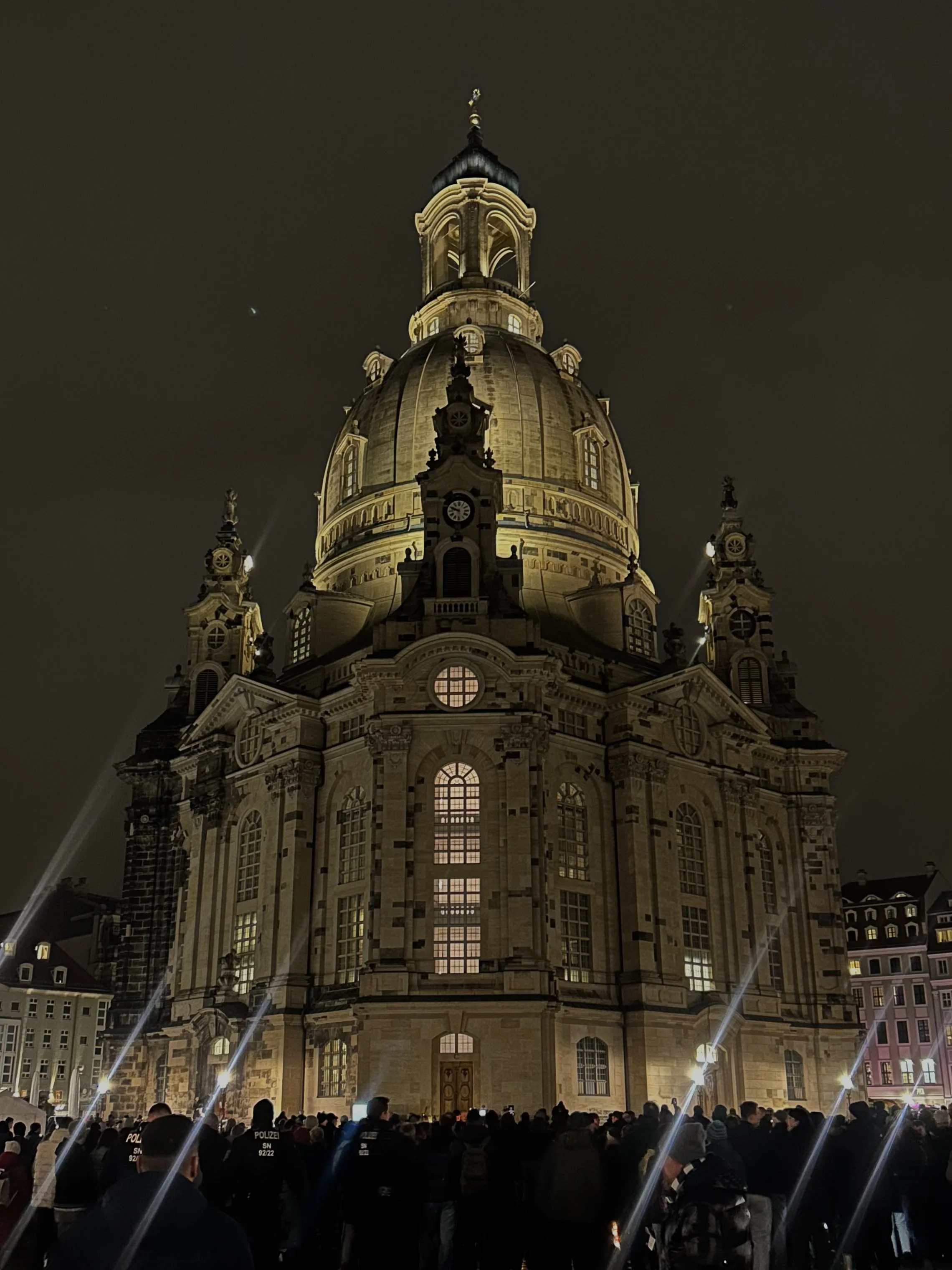
HANDS were joined in darkness. And as hundreds of eyes gazed out across the Altmarkt – twilight air misty with cold drizzle - the chimes of the Kreuzkirche bells brought time to a tight halt.
On February 13 - as with every other year - the Human Chain stretching around the Altstadt was a moment of extraordinary communal resistance.
The commemoration, even now, is a struggle for the ownership of history and truth. This year the event was attended by Rachel Lancaster, the Lord Mayor of Coventry, who had addressed the crowds beforehand.
The iron of the bells - the notes throbbing through the square and the streets for ten minutes – serves to remove the city from its quotidian concerns. Each year, that discordant music fills the senses. Its violence is suggestive of the madness of conflict: of all conflict.
A century before the 1945 bombing, the composer Richard Wagner was balanced upon the roof of the Kreuzkirche, under a wide night sky, the streets beneath him blazing with battle.
In 1849, as the roil of revolution hit the city, Wagner had taken up a look-out position: and his own head was occupied by the mad peals and the sound of gunfire below. ‘The combination of the bells and the cannon,’ he said, were ‘intoxicating’. He later wrote: ‘in the immediate vicinity of the frightful clangour of the tower bell and to the accompaniment of Prussian bullets splattering against the tower walls, I spent one of the most noteworthy nights of my life.’
He subsequently had to flee into exile; romanticism met with brute reality. Yet the strange music of the Kreuzkirche bells remained deep within him.
For Dresden, romanticism was shattered and scorched and ground into dust in 1945. Every era is marked with conflict; what makes Dresden and the Human Chain remarkable is the concerted effort to remain alive to the ever-present danger, to avoid once more falling into the abyss. Just for a few moments, those deep, dark bells remove all listeners from the present, as a reminder to guard themselves against the future.